
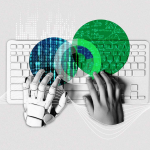








Cybersecurity is no longer a niche topic reserved for IT teams or large corporations. In 2026, it has quietly become part of everyday life. Whether you are checking emails, transferring money, using social media, or even browsing casually, you are interacting with systems that can be targeted by increasingly advanced threats. The biggest shift behind this change is the rise of artificial intelligence in cyber attacks.
AI has made life easier in many ways, but it has also given cybercriminals powerful tools to operate faster, smarter, and with far greater precision. What used to take hours or days can now happen in seconds. Attacks are no longer random or obvious. They are calculated, personalized, and often invisible until the damage is done.
Understanding how AI powered cyber threats work and how to protect yourself is no longer optional. It is essential.
The Evolution of Cyber Threats in the Age of AI

A few years ago, most cyber threats followed predictable patterns. You might receive a poorly written phishing email or encounter malware that could be detected by basic antivirus software. These threats still exist, but they are no longer the biggest concern.
In 2026, cyber threats have evolved into something far more complex. AI is now being used to automate attacks, analyze massive amounts of data, and identify vulnerabilities faster than any human could. This means attackers can target individuals and businesses with extreme accuracy.
For example, instead of sending the same phishing email to thousands of people, AI can now craft unique messages tailored to each person. It can mimic writing styles, replicate tone, and even reference personal details gathered from public data. This level of personalization makes it much harder to detect scams.
Another major shift is speed. AI systems can scan networks, find weaknesses, and launch attacks almost instantly. This leaves very little time for traditional security systems to respond.
How AI Is Changing the Hacker Playbook
The way cybercriminals operate has changed dramatically. AI has not just improved existing methods but introduced entirely new ones.
One of the most concerning developments is the use of AI generated phishing attacks. These are not the obvious scam emails people used to laugh at. They are convincing, well written, and often indistinguishable from legitimate communication. Some even include voice messages or deepfake videos that appear to come from trusted sources.
Deepfake technology has become another powerful tool. Imagine receiving a video call from what looks like your boss asking for urgent financial action. In reality, it could be a highly realistic AI generated impersonation. These scenarios are no longer theoretical. They are already happening.
AI is also being used to create adaptive malware. Unlike traditional malware that follows a fixed pattern, adaptive malware can change its behavior to avoid detection. It learns from the environment it infects and adjusts accordingly. This makes it extremely difficult for standard antivirus programs to identify and remove it.
The Role of Antivirus in 2026
With threats becoming more intelligent, the role of antivirus software has also evolved. It is no longer just about scanning files and removing known viruses. Modern antivirus solutions are powered by AI themselves, creating a kind of digital arms race between attackers and defenders.
In 2026, a good antivirus program does much more than basic protection. It monitors behavior, detects unusual activity, and responds in real time. For example, if a program suddenly tries to access sensitive data or modify system files without permission, advanced antivirus software can block the action immediately.
Cloud based security has also become a key feature. Instead of relying only on local databases, antivirus tools now connect to global threat intelligence networks. This allows them to recognize new threats as soon as they appear anywhere in the world.
However, relying solely on antivirus is not enough. While it is a critical layer of protection, users must also adopt safe habits and remain aware of potential risks.
Common AI Powered Cyber Threats You Should Know
Understanding the types of threats you might encounter is the first step toward staying safe.
AI driven phishing is one of the most widespread threats. These attacks use machine learning to craft messages that look authentic. They may appear to come from your bank, a colleague, or even a friend.
Ransomware has also become more sophisticated. AI can identify the most valuable data on a system and encrypt it first, increasing the chances that victims will pay. Some ransomware attacks now include negotiation bots that interact with victims automatically.
Credential stuffing and password attacks have improved as well. AI can quickly test millions of password combinations and adapt based on success rates. Weak or reused passwords are especially vulnerable.
Another growing concern is AI powered social engineering. Attackers use data from social media and other sources to build detailed profiles of their targets. This information is then used to manipulate individuals into revealing sensitive information or taking risky actions.
Why Individuals Are Now Prime Targets
In the past, large organizations were the primary targets for cyber attacks. While they are still at risk, individuals are now just as attractive to attackers.
One reason is scale. It is often easier to target thousands of individuals than to break into a well protected corporate system. AI makes it possible to automate these attacks, making them both efficient and profitable.
Another reason is data value. Personal data such as login credentials, financial information, and private messages can be extremely valuable. Even small pieces of information can be combined to create a bigger picture.
People also tend to have weaker security practices compared to businesses. Using the same password across multiple accounts, ignoring software updates, or clicking on suspicious links are common behaviors that attackers exploit.
Practical Steps to Protect Yourself in 2026
Staying safe in this evolving landscape does not require technical expertise, but it does require awareness and consistent habits.
Start with strong and unique passwords for each account. Using a password manager can make this much easier. Avoid reusing passwords, even for less important accounts.
Enable two factor authentication wherever possible. This adds an extra layer of security, making it much harder for attackers to gain access even if they have your password.
Keep your software updated. Updates often include security patches that fix known vulnerabilities. Ignoring them can leave your system exposed.
Be cautious with emails and messages, even if they appear legitimate. Take a moment to verify the sender before clicking on links or downloading attachments. If something feels off, it probably is.
Invest in a reliable antivirus solution that includes real time protection and AI based threat detection. While it is not a complete solution on its own, it is an essential part of your defense strategy.
The Future of Cybersecurity and AI
Looking ahead, the role of AI in cybersecurity will only continue to grow. Both attackers and defenders are constantly improving their tools, leading to an ongoing cycle of innovation.
On the positive side, AI is also helping security professionals detect and respond to threats more effectively. Advanced systems can analyze patterns, predict attacks, and even automate responses. This can significantly reduce the impact of cyber incidents.
However, the increasing sophistication of attacks means that users must remain vigilant. Technology alone cannot solve the problem. Awareness, education, and responsible behavior are just as important.
Final Thoughts
The rise of AI powered cyber threats in 2026 is not something to ignore or underestimate. It represents a fundamental shift in how cyber attacks are carried out. These threats are smarter, faster, and more convincing than ever before.
At the same time, the tools available to protect yourself have also improved. Modern antivirus software, combined with good security habits, can provide strong protection against most threats.
The key is to stay informed and proactive. Cybersecurity is no longer just a technical issue. It is part of everyday digital life. The more you understand it, the better prepared you will be to navigate the online world safely.