








Math has always been one of those subjects that divides people into two groups. Some enjoy the challenge, while others struggle to keep up with formulas, equations, and endless calculations. For years, traditional calculators helped ease the burden, but they were limited to basic functions. Today, that story is changing rapidly.
AI calculators are not just tools that give answers. They are becoming intelligent assistants that guide users through the process, explain concepts, and even adapt to different learning styles. This shift is quietly transforming how students learn, how professionals work, and how everyday people approach numbers.
The Evolution from Basic Calculators to AI-Powered Tools
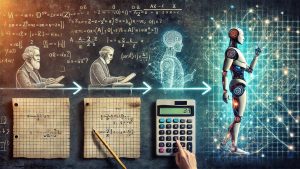
The journey from simple calculators to AI-driven systems is worth understanding. Early calculators were designed to perform arithmetic operations quickly. Over time, scientific and graphing calculators added more functions, making them useful for advanced mathematics.
However, these tools still required users to know what they were doing. If someone did not understand the concept, the calculator could not help beyond producing an answer.
AI calculators have changed that dynamic. They can now interpret questions written in plain language, break down complex problems step by step, and provide explanations that make sense to beginners. This makes them more than just machines. They act like tutors that are available anytime.
What Makes AI Calculators Different
The key difference lies in intelligence and adaptability. AI calculators are powered by machine learning and natural language processing. This allows them to understand not only numbers but also the context of a problem.
For example, instead of entering a formula manually, a user can type a question like “solve x squared plus 5x plus 6 equals zero.” The AI calculator processes the request, identifies the type of equation, and provides a solution along with steps.
Another important feature is learning behavior. Many AI tools track how users interact with problems. If someone repeatedly struggles with a concept, the system can offer simpler explanations or additional practice.
This level of personalization was not possible with traditional tools.
Making Math More Accessible for Everyone
One of the biggest impacts of AI calculators is accessibility. Math is no longer limited to those who can memorize formulas or follow complex procedures.
Students who once felt left behind now have a chance to learn at their own pace. AI calculators can simplify difficult concepts and remove the fear that often comes with math.
Even outside the classroom, people benefit from these tools. Whether it is calculating loan interest, managing budgets, or solving work-related problems, AI calculators make the process easier and faster.
This shift is especially important in a digital world where quick and accurate decisions matter.
Real-Time Problem Solving with Step by Step Guidance
A major advantage of AI calculators is their ability to provide step by step solutions. Instead of just showing the final answer, they explain how the solution is reached.
This is particularly useful for students preparing for exams. Understanding the method is often more important than getting the answer right.
For example, when solving a calculus problem, an AI calculator can show each stage, from differentiation to simplification. This helps users see where they might have gone wrong and learn from their mistakes.
Over time, this builds confidence and improves problem-solving skills.
The Role of AI in Reducing Human Error
Manual calculations are prone to errors, especially when dealing with large data sets or complex equations. Even a small mistake can lead to incorrect results.
AI calculators reduce this risk significantly. They follow precise algorithms and can handle large volumes of data without losing accuracy.
For professionals in fields like engineering, finance, and data analysis, this reliability is crucial. It saves time and ensures that decisions are based on accurate information.
At the same time, users can double-check their work and gain a better understanding of the process.
Enhancing Learning Rather Than Replacing It
There is a common concern that AI tools might make people dependent and reduce their ability to think critically. While this is a valid point, the reality is more balanced.
When used correctly, AI calculators enhance learning rather than replace it. They act as support systems that guide users through complex topics.
Students can use them to verify answers, understand difficult concepts, and practice more effectively. Teachers can also integrate these tools into lessons to make learning more interactive.
The key lies in using AI as a supplement, not a substitute for thinking.
AI Calculators in Everyday Life
The impact of AI calculators goes beyond classrooms and offices. They are becoming part of everyday decision making.
Consider situations like planning a trip budget, calculating discounts while shopping, or estimating monthly expenses. AI calculators can handle these tasks quickly and accurately.
Many modern apps integrate AI-powered calculation features, making them accessible on smartphones and other devices. This convenience ensures that users always have a reliable tool at their fingertips.
Popular Use Cases Across Different Fields
AI calculators are being used in a wide range of industries. In education, they help students learn faster and more effectively. In finance, they assist with investment calculations and risk analysis.
Engineers use them to solve complex equations and optimize designs. Healthcare professionals rely on them for dosage calculations and data analysis.
Even content creators and digital marketers use AI calculators to analyze metrics and optimize strategies.
This versatility highlights how deeply these tools are embedded in modern workflows.
Challenges and Limitations to Consider
Despite their advantages, AI calculators are not without challenges. One concern is over-reliance. If users depend too much on these tools, they may struggle to solve problems independently.
Another issue is accuracy in edge cases. While AI systems are highly reliable, they are not perfect. Misinterpretation of input or unusual problem structures can sometimes lead to errors.
Privacy is also a factor, especially when using online tools that collect user data.
Understanding these limitations helps users make better decisions about when and how to use AI calculators.
The Future of AI Calculators
Looking ahead, AI calculators are expected to become even more advanced. With improvements in machine learning, they will offer more accurate predictions, deeper insights, and better personalization.
We may see tools that can integrate with augmented reality, allowing users to solve problems by simply pointing their device at a question.
Voice-based interaction is another area of growth. Instead of typing, users will be able to speak their queries and receive instant solutions.
As technology continues to evolve, the line between learning and assistance will become even more seamless.
Why This Matters More Than Ever
In a world driven by data and technology, the ability to work with numbers is more important than ever. AI calculators are helping bridge the gap between complexity and understanding.
They empower users to solve problems faster, learn more effectively, and make informed decisions.
For students, this means less frustration and more confidence. For professionals, it means improved efficiency and accuracy. For everyone else, it means having a reliable tool that simplifies everyday tasks.
Final Thoughts
AI calculators are not just changing how we solve math problems. They are changing how we think about math itself.
Instead of being seen as a difficult subject, math is becoming more approachable and even enjoyable. With the help of intelligent tools, users can focus on understanding concepts rather than getting stuck on calculations.
The shift is already happening, and it is only going to accelerate in the coming years. Those who embrace these tools will find themselves better equipped to navigate a world where numbers play a central role.